The Table at Sea
On the cuisine of Cartagena, the ingredients no other coast can claim,
and what happens when the kitchen moves to the water.
The plate arrives and the city is right there.
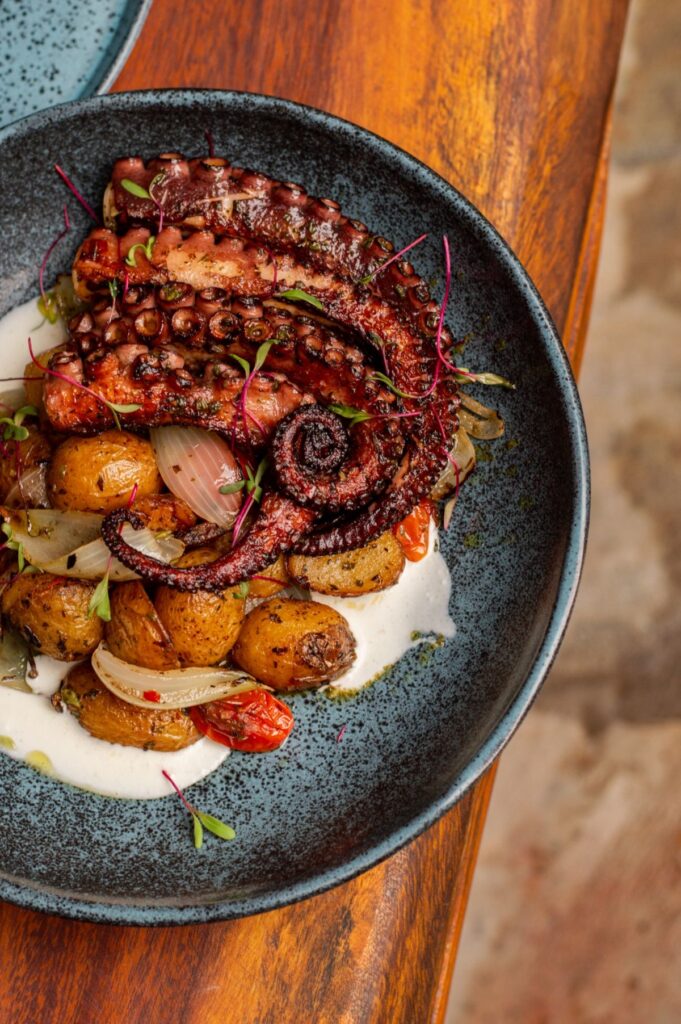
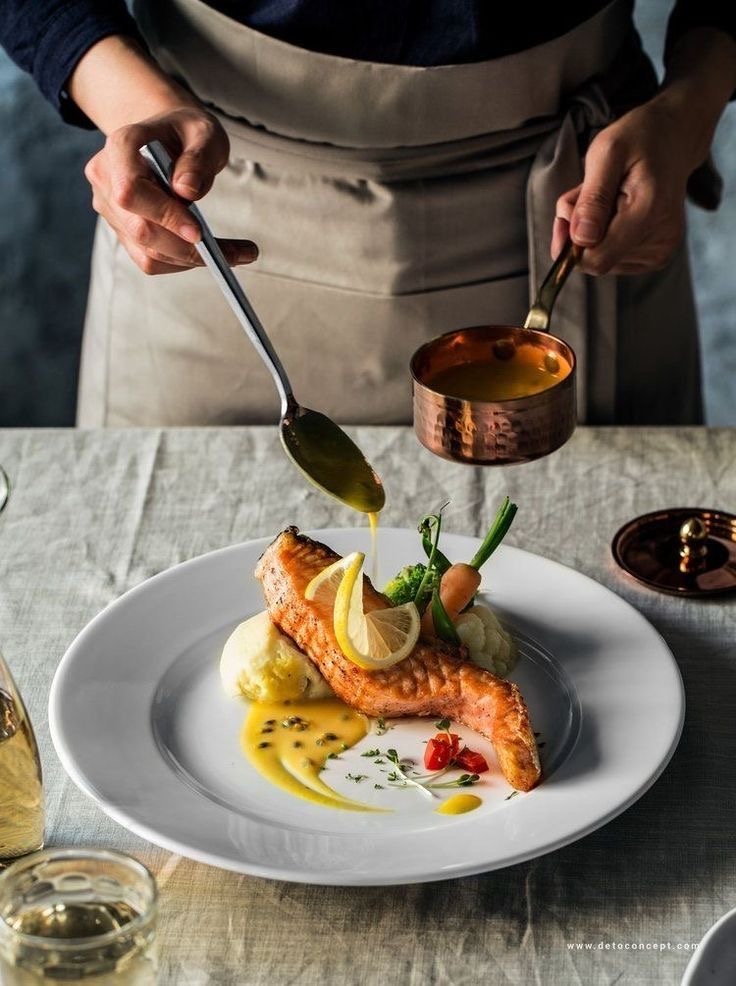
Not through a window, not in a photograph on the wall — actually there, on the horizon, the ancient murallas catching the afternoon light while a dish of pargo platero with corozo foam lands on the table in front of you. The chef who designed this menu has spent years learning what this coast produces. The fish came from these waters this morning. The corozo — a fruit that grows on the palm trees of this specific stretch of Colombian coast — was reduced into a sauce that doesn’t exist anywhere else, because the corozo doesn’t grow anywhere else.
This is what it means to eat in Cartagena.
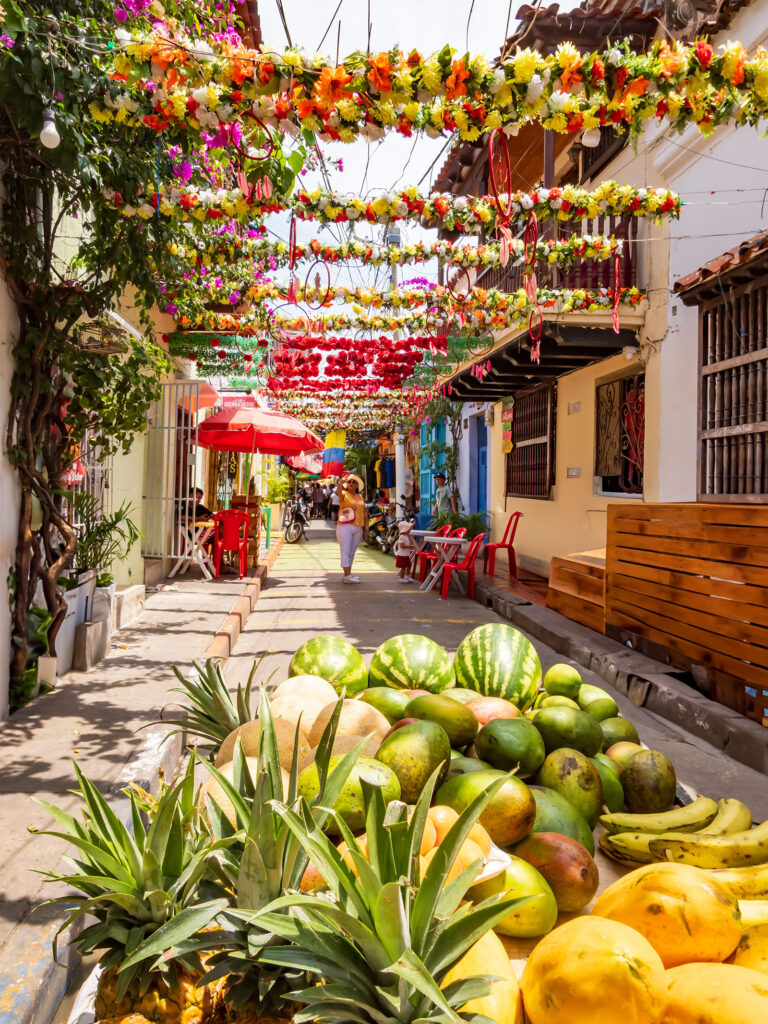
The city’s gastronomic scene has been building quietly for years and is now impossible to ignore. Celele, in the colorful barrio of Getsemaní, entered The World’s 50 Best Restaurants in 2025 at number 48 — the only Cartagena restaurant on the list, and winner of the Sustainable Restaurant Award. Chef Jaime Rodríguez spent two and a half years researching the biodiversity of this coast before opening, working with communities in the bosque seco tropical of this region to rescue ingredients that had been forgotten or discarded: orejero, whose seeds make a paste unlike anything produced anywhere else; guáimaro, the maya nut; pomarrosa, a fruit that tastes of rosewater; jumbalee, a wild fruit with no name in any other cuisine. Seventy percent of Celele’s ingredients are wild-harvested from this region.
Carmen, in the barrio of San Diego inside the murallas, brings international technique to the same local pantry — its pargo platero prepared with fermented pineapple and Colombian yam has become one of the most distinctive dishes in the city. The restaurant 1621, housed inside the seventeenth-century convent that is now the Sofitel Legend Santa Clara, chose this coast’s ingredients for a French kitchen — which says something about what those ingredients are worth. And the Four Seasons, which opened in Getsemaní in April 2026 — the first of the brand in this city — confirms that Cartagena has become one of the world’s most desired gastronomic destinations.
What the water adds to all of this is its own chapter entirely.
When the kitchen moves to the water — when a chef designs a menu specifically for a vessel, using the same ingredients and the same knowledge of this coast, and serves it with the murallas on the horizon and the sea of Cartagena as the only backdrop — something changes. It is not simply that the view is beautiful, though it is. It is that the context completes the dish. The orejero paste, the corozo foam, the pargo from these waters — they arrive having traveled the shortest possible distance from their origin to the table. The sea that produced them is right there. You are eating, in the most literal sense, exactly where the food comes from.
There is a reason the best meals are remembered not only for what was on the plate but for everything around it. The light. The company. The particular way a place felt at that specific hour. In Cartagena, that hour — when the sun drops toward the murallas and everything goes amber and the sea holds the reflection — is unlike any other hour in any other city. And the table that sits inside it, on the water, with a menu built from the ingredients of this coast, is unlike any other table.
The city earned its place on the world’s gastronomic map. The water offers its own version of the same story — quieter, more private, and entirely unrepeatable.