What García Márquez Understood
On desire, and a city designed to be loved from the water.
There is a moment, sometime between 5 and 6 in the afternoon, when Cartagena stops being a city and becomes a question.
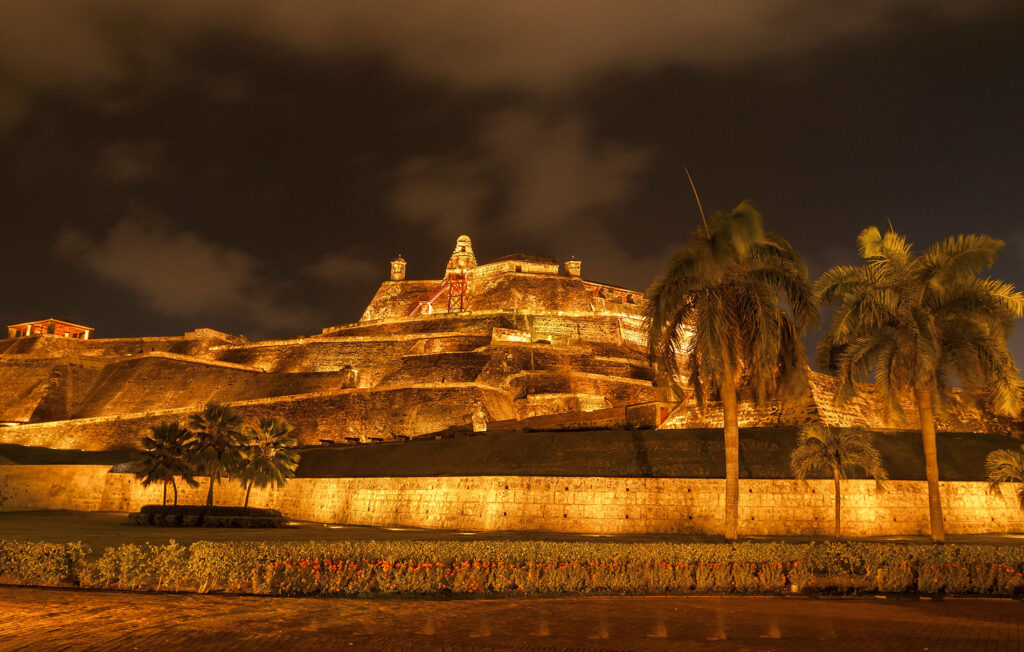
The light does it. The afternoon sun, dropping toward the peninsula, hits the coral stone of the ancient murallas at an angle that turns everything amber — not the amber of a filter or nostalgia, but a specific, physical amber produced by five centuries of calcium carbonate compressed into architecture. The shadows go blue. The bougainvillea turns deep red. The sea, turquoise all day, goes the color of a copper pan. And for nearly an hour, Cartagena holds this — unhurried, generous with its light, offering the kind of beauty that doesn’t ask you to do anything with it.
From the murallas, drink in hand, the bay ahead — this is one of the great urban rituals of the Americas. But there is another way to experience the same light. One that requires leaving the city, and in doing so, seeing it whole for the first time.
From the water, Cartagena shows what it rarely gives away on land.
Gabriel García Márquez — Colombia’s Nobel laureate in Literature, born on the Caribbean coast and shaped by it — arrived in Cartagena as a young man and never fully let it go. He eventually built a house here, inside the murallas, where it still stands today. He kept returning to this city, studying it, until he finally set his celebrated novel about love inside it. The reason, visible in every page of El amor en los tiempos del cólera, is that Cartagena’s physical geography enacts the experience of longing in a way no other place does.
In the novel, the bay is not backdrop. It is medium. Desire travels across water because García Márquez understood something the city has always known: that distance, in Cartagena, is not an obstacle to romance. It is its architecture.
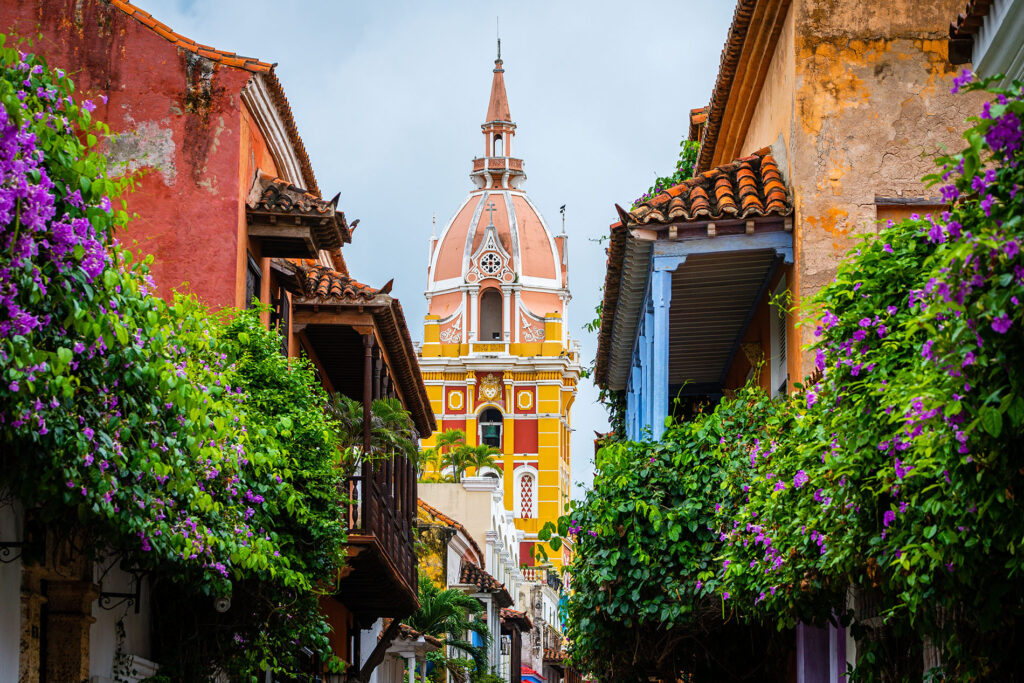
The old city was built on an island. Anyone arriving by sea encountered it gradually — first the silhouette of the murallas rising from the water, then the bell tower of San Pedro Claver, the dome of the cathedral, the color of the rooftops, and finally the city itself. That slow approach — that sustained contemplation of something beautiful, just out of reach — is etched into this place. Cartagena was designed, from its foundations, to be desired from a distance.
From two nautical miles offshore, that design reveals itself completely. The old city rises from the water in almost exactly the silhouette it has had since the sixteenth century. A skyline that belongs to no particular era, and to no particular mood — except the one the light is in at that hour.
The light of Cartagena is unlike anything in the region. This close to the equator, the golden hour lasts nearly twice as long as in temperate cities. The humidity carries the light differently — diffusing it, softening shadows, extending the amber spectrum across the bay until the whole scene seems lit from within. The coral stone of the murallas amplifies this, releasing the day’s heat slowly and evenly as the sun drops.
On the water, moving through the bay as the city changes color, this light falls across everything without asking permission. The person beside you — the murallas behind them, the open sea ahead — is the most beautiful thing in the frame. Cartagena does this deliberately.
Cartagena on land is one of the great sensory experiences in the Americas. Its streets, its food, its music — the palenqueras on the Plaza de los Coches, the smell of coconut rice and fried fish drifting from open kitchens in Getsemaní, the sound of champeta at midnight from a second-floor window. A city alive at every hour, in every sense.
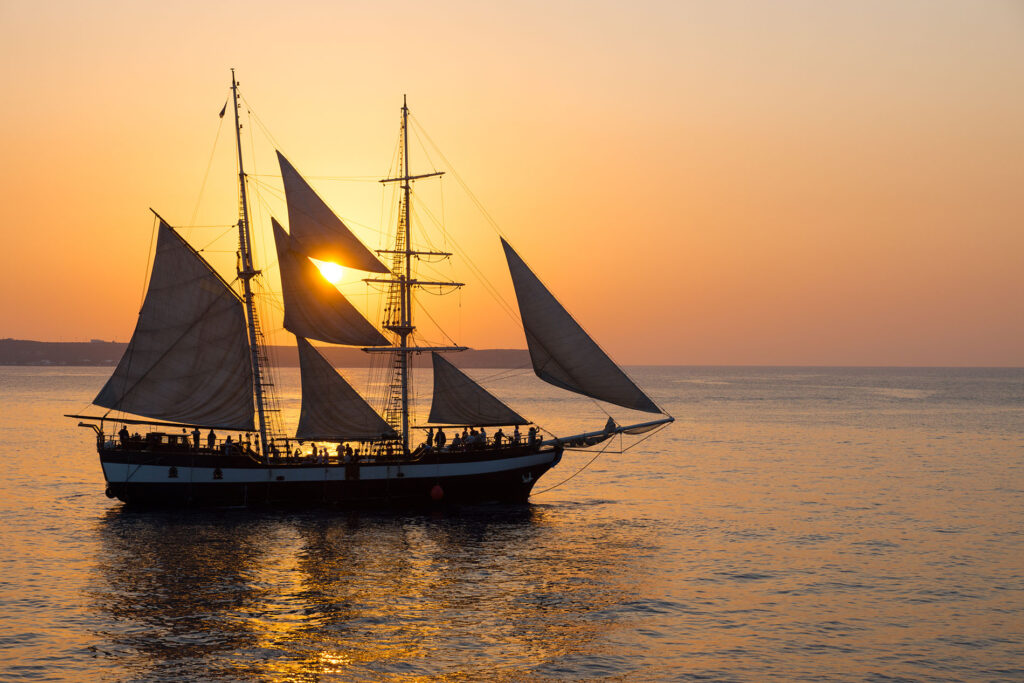
From the Muelle de los Pegasos, where the Bahía de las Ánimas opens toward the horizon, something shifts the moment the city is behind you. Moving through the bay as the sun drops, with the city visible but unreachable, the streets go quiet. What remains is simpler: the light on the water, the sound of the hull moving through these waters, the particular silence that only exists when there is nothing left to do but be exactly where you are.
This is the condition under which people say things they have been meaning to say. Not because the sea is theatrical, but because everything that usually keeps two people slightly apart — the noise, the schedule, the performance of ordinary life — has dissolved. García Márquez understood this. Florentino Ariza — the novel’s protagonist, a man who waits fifty-one years for the woman he loves — does not declare his love in a plaza or at a table. He waits. He finds a boat. He understands that the right words require the right conditions.
The novel ends on the water. Florentino and Fermina, finally together after five decades, are on a vessel with nowhere fixed to go. Fermina asks how long they can keep sailing like this. Florentino answers: toda la vida. Their whole lives. No destination. Just the water, and the choice to stay on it.
That is what the water off Cartagena offers, some evenings, when the city turns amber on the horizon and there is nothing left to do but move through it — the feeling that wherever you are going, you are already there.